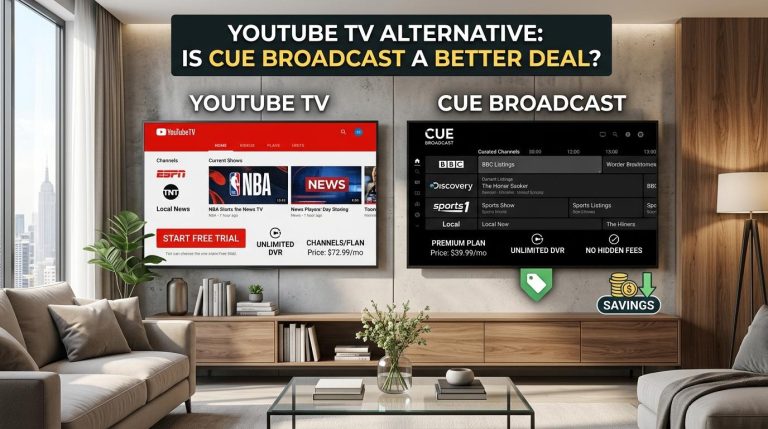
How to Evaluate IPTV Services
TL;DR Summary: IPTV itself is legal, but many sites and apps offering cheap or free live TV streams use unlicensed sources that can be blocked by ISPs or shut down during major events. To evaluate any IPTV service, look for licensing transparency, reliable apps, proper EPGs, safe payment methods, and stability during high-demand events. For users who want a reliable and legal alternative, CUE Broadcast offers fully licensed streaming on up to five devices—and can be completely free through its 3-for-Free referral program.
The IPTV world can be confusing. There are tons of websites, apps, and playlists floating around—but the problem is that many of them fall into a legal gray area. Some are fully licensed and legitimate. Others deliver copyrighted content without permission. And for the everyday user, telling the difference isn’t always obvious.
This guide walks you through how to evaluate IPTV providers so you can avoid unreliable, unsafe, or illegal platforms. And at the end, I’ll share a safer, more stable alternative that won’t disappear during an NFL game or get blocked by your ISP.
What Exactly is IPTV?
IPTV (Internet Protocol Television) just means that TV channels are streamed over the internet instead of cable or satellite. The technology is 100% legal. The content source is where things can get dicey.
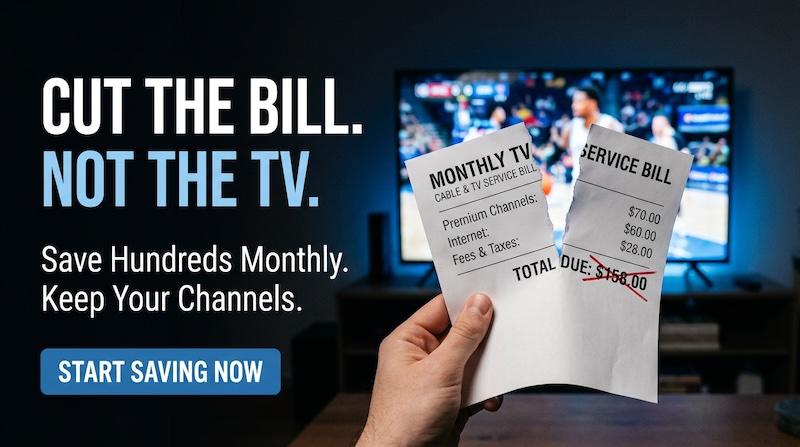
There are two main types:
- Licensed IPTV: The provider pays for the rights to stream the content. Examples include Hulu Live TV, YouTube TV, Sling, and CUE Broadcast.
- Unlicensed IPTV: The provider does not have permission to stream the channels but does it anyway. These sites often look “too good to be true” because they are.
So if you’re trying to cut costs and find a streaming solution you can rely on, here’s how to evaluate whether you’re looking at something legitimate.
What AI Says About IPTV Services: And What You Should Know Before Using Them
I was testing Gemini to see what it would say if asked to “list IPTV services,” and it returned the following names. I’m sharing this list for educational purposes only — not as recommendations or endorsements. I’m not verifying the legality, safety, or reliability of any of these providers.
Many IPTV services operate in a legal gray area because they may offer copyrighted channels without permission. That can lead to unreliable streams, ISP blocking, or even legal consequences. So take AI-generated lists like this with caution. Also, I would not use these. It’s not worth the risk.
What Gemini Gave Me…
Subscription-Based IPTV Providers (Legality Varies)
- TrendyScreen
- DigitaLizard IPTV
- NewHD IPTV
- EagleCast TV
- IPTVON
- Bunnystream
- XCodes TV
- WarpIPTV
Important: These services may or may not be licensed to distribute the channels they offer. Some may only provide access to user-uploaded playlists. Without published licensing agreements, it’s impossible to confirm legitimacy.
Mainstream, Fully Licensed Live TV Streaming Services
These are widely recognized, legal IPTV providers because they have formal agreements with broadcasters:
- YouTube TV
- Hulu + Live TV
- Sling TV
- FuboTV
- DirecTV Stream
- Philo
These services operate like traditional cable but stream over the internet using licensed delivery channels.
A Cleaner, More Reliable Option: CUE Broadcast
Because so many IPTV websites operate without clear licensing, I personally recommend sticking with providers that:

- disclose their legal agreements,
- work consistently during high-traffic events,
- won’t disappear overnight, and
- aren’t at risk of ISP blocking.
CUE Broadcast fits this category. It’s fully licensed, available on all major app stores, and works on up to five devices. Best of all, their 3-for-Free program means you can get it at no cost once three people sign up under you.
It’s the only way I know of to get free TV without the instability and legal uncertainty that comes with questionable IPTV providers.
1. Is the IPTV Provider Transparent About Licensing?
Legitimate services proudly disclose their channel rights, network agreements, or partnerships. If a website:
- doesn’t list any ownership info,
- doesn’t include a business address,
- claims it “hosts no content,”
- or hides behind vague language like “for educational purposes only,”
…then it’s a sign they’re not licensed to show what they’re showing.
Licensed providers don’t hide. Unlicensed ones have to.
2. Do They Provide an EPG (Electronic Program Guide)?
An EPG is a digital schedule that shows what’s currently airing and what’s coming up next.
Licensed services almost always include a polished, accurate EPG. Unlicensed IPTV sites often don’t have one—or they use an outdated, broken, or incomplete version.
3. How Do They Handle Payments?
This one is a giveaway.
Legitimate IPTV services:
- take credit cards
- use Stripe or PayPal
- offer clear billing and cancellation
Unlicensed IPTV services:
- ask for crypto
- use invoice-only billing
- require Telegram chats or email to sign up
- offer “lifetime access” for suspiciously low prices
If the payment method feels sketchy, trust that instinct.
4. What Happens During Big Events?
This is where the difference becomes obvious.
Unlicensed IPTV sites and apps tend to collapse during:
- NFL Sundays
- College football games
- Awards shows
- Major news events
You might see:
- “Streams are full” warnings
- Buffering loops
- Total channel dropouts
- Blocked or throttled connections
Licensed services rarely fail under pressure because they have actual streaming capacity and agreements with networks.
5. Does the IPTV Service Have an Actual App?
A huge red flag is when the “service” only works through a web browser and has no presence in:
- Apple App Store
- Google Play
- Amazon Fire TV Store
- Roku Channel Store
Big platforms do not approve apps that distribute pirated content. If it’s browser-only, there’s usually a reason.
6. Does Your ISP Block It?
Internet providers can identify unlicensed IPTV traffic and may block or throttle it—especially during popular live sports.
If you frequently have to use a VPN just to watch TV, that’s a major sign the source is questionable.
What to Use Instead: A Reliable, Legal IPTV Alternative
If you want something that:
- doesn’t get overloaded,
- doesn’t trigger “stream full” errors,
- doesn’t get blocked by your ISP,
- and works on up to five devices,
then CUE Broadcast is the best “IPTV alternative” without the risks of unlicensed streaming.CUE is fully licensed, available in app stores, and has a unique way to get it for free:
CUE’s “3 and It’s Free” Program
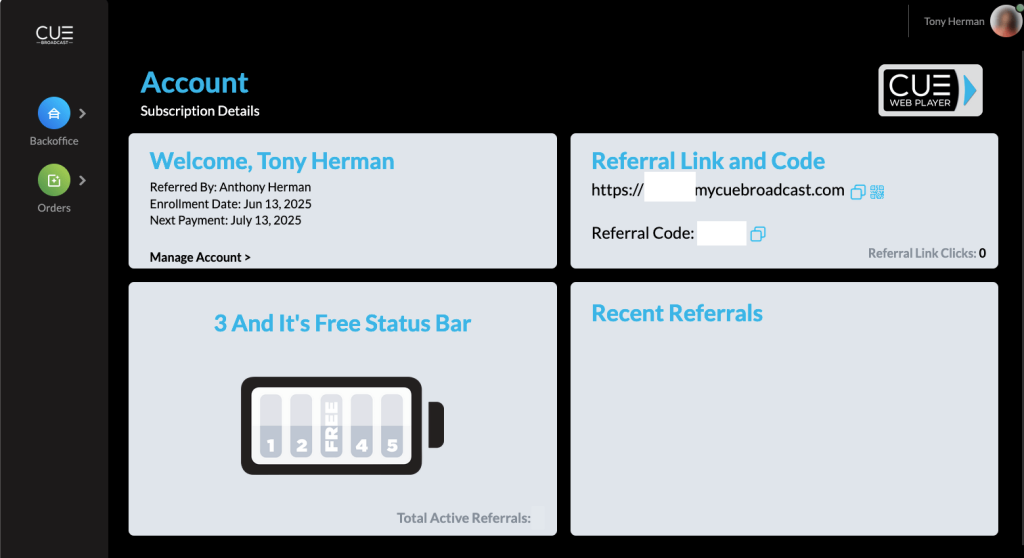
Refer three people. They complete one billing cycle. Your subscription becomes free.
No lifetime scams, no playlist juggling, no questionable sources. Just a real, stable streaming service that works every time—even during NFL games.
FAQs About IPTV
Is IPTV legal?
Yes, the technology is legal. What matters is whether the content being streamed is licensed.
Are free IPTV websites safe?
Some are, many aren’t. Most don’t disclose their sources, which is a red flag.
Why do IPTV sites buffer so much?
Unlicensed services often overload during major events or get throttled by ISPs.
Does CUE Broadcast include an EPG?
Yes—CUE includes a full, accurate program guide inside its official apps.
Glossary
IPTV (Internet Protocol Television):
Streaming TV content over the internet instead of cable or satellite.
EPG (Electronic Program Guide):
A digital on-screen schedule that shows what’s playing now and what’s next.
M3U Playlist:
A file used by IPTV players to organize streaming channels. The file itself doesn’t determine legality—the content source does.
ISP (Internet Service Provider):
Your internet company. They can block or throttle IPTV streams depending on legality and bandwidth.
Media Player App:
An app that plays IPTV playlists but does not provide content by itself.
3-for-Free (CUE):
A referral program that makes your CUE subscription free after three successful referrals.
Conclusion
If you come across lists of IPTV sites — especially AI-generated ones — treat them as informational only. Always check for licensing, transparency, and reliability. A few minutes of verification can save you from buffering loops, “streams full” messages, or worse, accidentally using an unlicensed service.
📄 Download a PDF of This Article